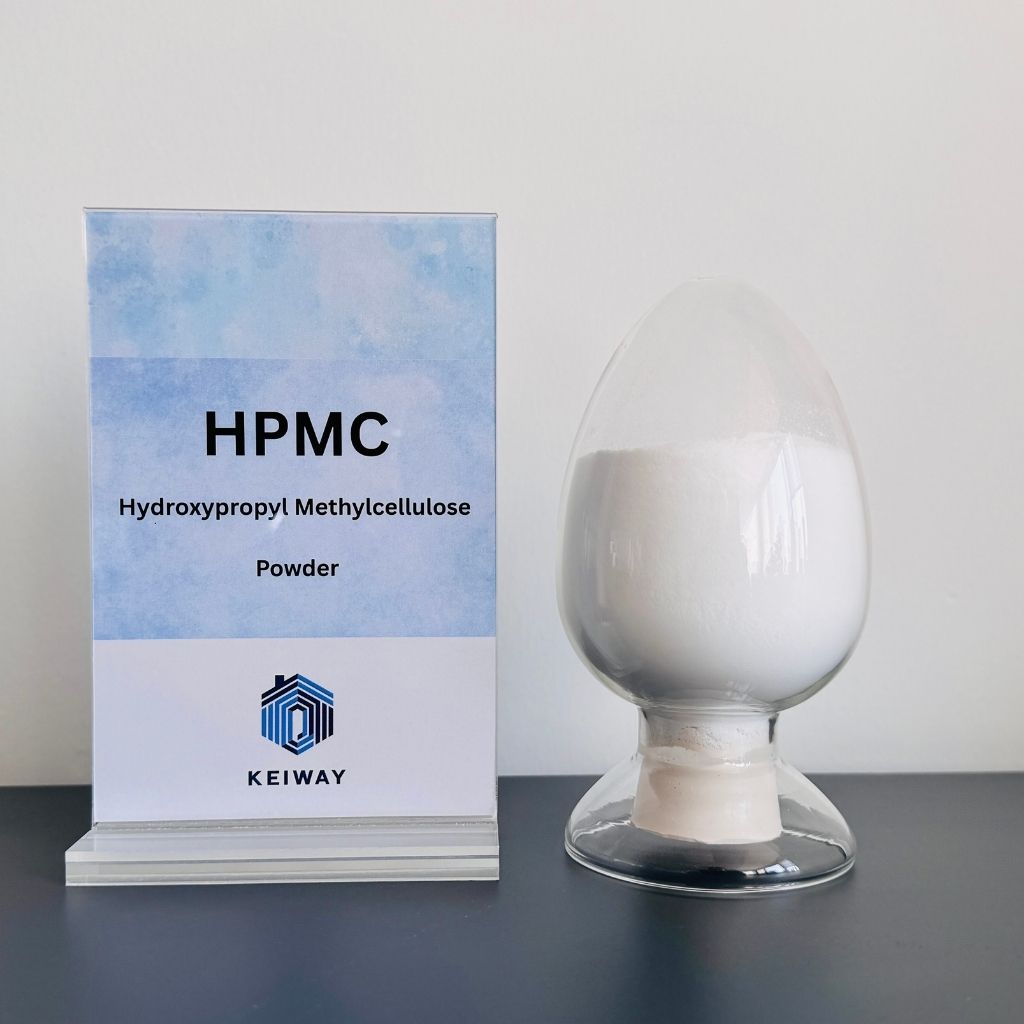
Hydroxypropyl Methylcellulose (HPMC), also known as Hypromellose, is a non-ionic cellulose ether derived from natural refined cotton or wood pulp through a series of chemical modifications (etherification with methyl chloride and propylene oxide). It appears as a white to off-white, odorless, tasteless fine powder that is highly soluble in cold water, forming clear or slightly turbid viscous colloidal solutions, while remaining insoluble in hot water.
In the construction industry (especially for dry-mix mortars), HPMC serves as a versatile, high-performance additive acting primarily as a thickener, water retention agent, rheology modifier, binder, and workability enhancer. It significantly improves the performance of cement-based and gypsum-based materials.
Key Features & Advantages
- Excellent Water Retention — Prevents rapid water loss in mortars, ensuring full cement hydration, reduced cracking, and improved final strength even in hot, dry, or windy conditions.
- Superior Thickening & Anti-Sag Properties — Provides pseudoplastic rheology for better consistency, excellent slip resistance on vertical surfaces, and enhanced workability.
- Extended Open & Working Time — Allows more time for adjustments, tile positioning, and smoothing, reducing material waste and improving installation quality.
- Improved Workability & Lubricity — Makes mixing, pumping, troweling, and finishing easier, with smoother application and less effort for workers.
- Enhanced Adhesion & Bonding — Boosts bond strength to various substrates (concrete, gypsum board, old tiles), leading to more durable and reliable results.
- High Compatibility & Stability — Works well with other additives (RDP, defoamers, fillers), stable across wide pH and temperature ranges, with reversible thermal gelation.
- Eco-Friendly & Non-Toxic — Derived from natural cellulose, low-VOC, REACH-compliant, safe for indoor and green building projects.
- Customizable Viscosity Grades — Available from low to high viscosity (e.g., 40,000–200,000 cps) to meet specific formulation needs.
Typical Applications in building materials include:
- Tile adhesives and thin-set mortars (improves slip resistance and open time)
- Wall putty/skim coat and joint compounds
- Cement-based plasters, renders, and self-leveling compounds
- Gypsum plasters and joint fillers
- Exterior insulation and finish systems (EIFS)