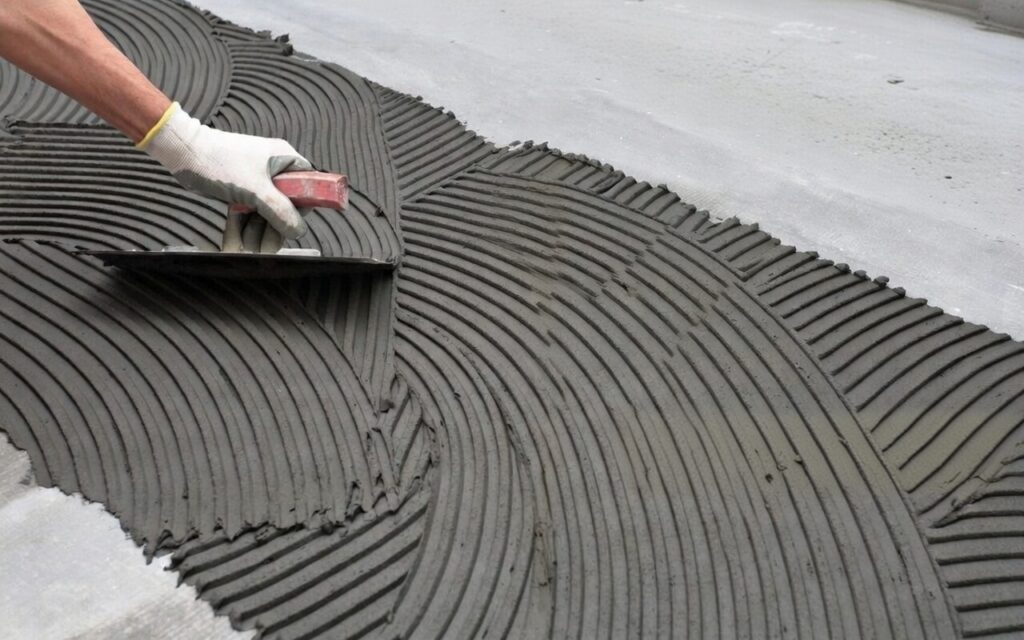
Tile Adhesive
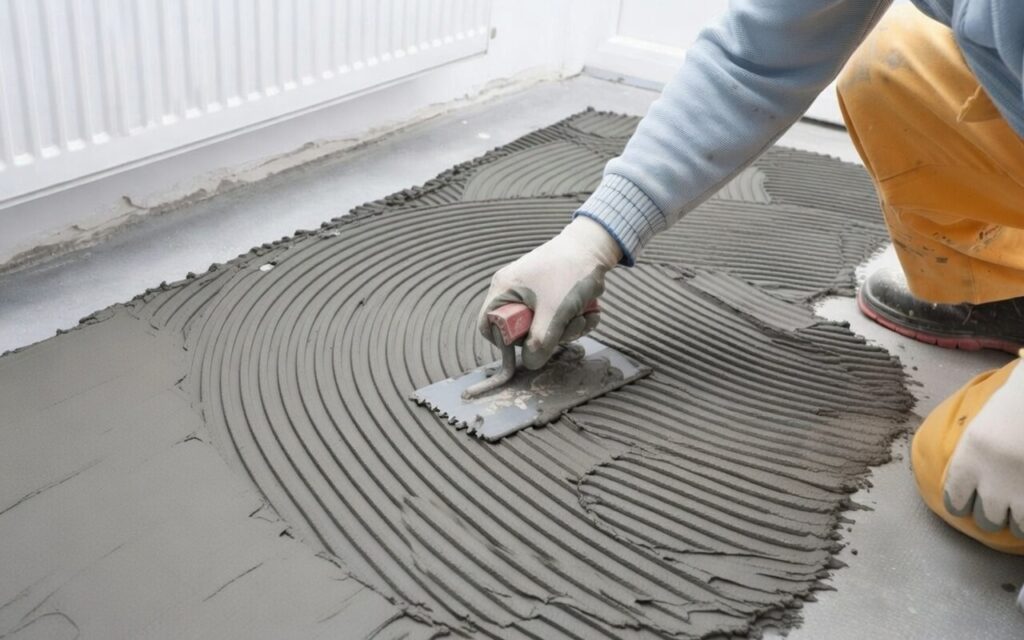
Tile adhesive, also commonly known as tile bond, thinset mortar, or cementitious tile adhesive, is a high-performance bonding material specifically designed to securely fix ceramic, porcelain, natural stone, or mosaic tiles to various substrates such as concrete, cement screed, gypsum board, or existing tiles.
It is typically a pre-mixed dry powder composed of:
- Portland cement (as the main binder),
- graded fine sand or quartz,
- limestone or calcium carbonate fillers,
- and specially selected performance-enhancing additives (such as redispersible polymer powders, cellulose ethers like HPMC, and other modifiers).
Tile adhesives are classified according to the international standard EN 12004 (also aligned with ISO 13007), where “C” stands for cementitious (cement-based) adhesive. The classification is primarily based on tensile adhesion strength (measured in MPa after different curing conditions, including dry, wet, heat, and freeze-thaw cycles).
- C1 Tile Adhesive (Normal / Standard class): Basic cementitious adhesive with a minimum tensile adhesion strength of ≥ 0.5 N/mm² (0.5 MPa). It is suitable for standard interior wall and floor tiling in dry or moderately damp conditions. Recommended for medium-sized tiles (generally up to 30×30 cm or 40×40 cm, depending on manufacturer). Ideal for residential projects with stable substrates and low to moderate demands (e.g., living rooms, hallways, dry kitchen floors).
- C2 Tile Adhesive (Improved / Enhanced class): High-performance cementitious adhesive with a significantly higher minimum tensile adhesion strength of ≥ 1.0 N/mm² (1 MPa). It offers superior bonding power, better resistance to moisture, temperature changes, freeze-thaw cycles, and substrate movement. Recommended for larger format tiles (up to 60×60 cm or bigger), porcelain tiles with low water absorption, natural stone, wet areas (bathrooms, showers, pools), exterior applications, underfloor heating, or more challenging substrates (e.g., old tiles, plywood, or flexible surfaces). Often polymer-modified for added flexibility (commonly combined with optional classes like S1/S2 for deformability).
Tile adhesive mainly relies on HPMC and RDP as core functional additives. HPMC provides excellent water retention and rheology control, ensuring good workability, smooth troweling, extended open time, and improved sag resistance during application. RDP significantly enhances adhesion strength and flexibility, improving bonding performance to various substrates and reducing the risk of debonding or cracking. In addition, retarders are used to adjust setting time under different environmental conditions, while defoamers help minimize air entrainment, ensuring a dense mortar structure and consistent application performance.